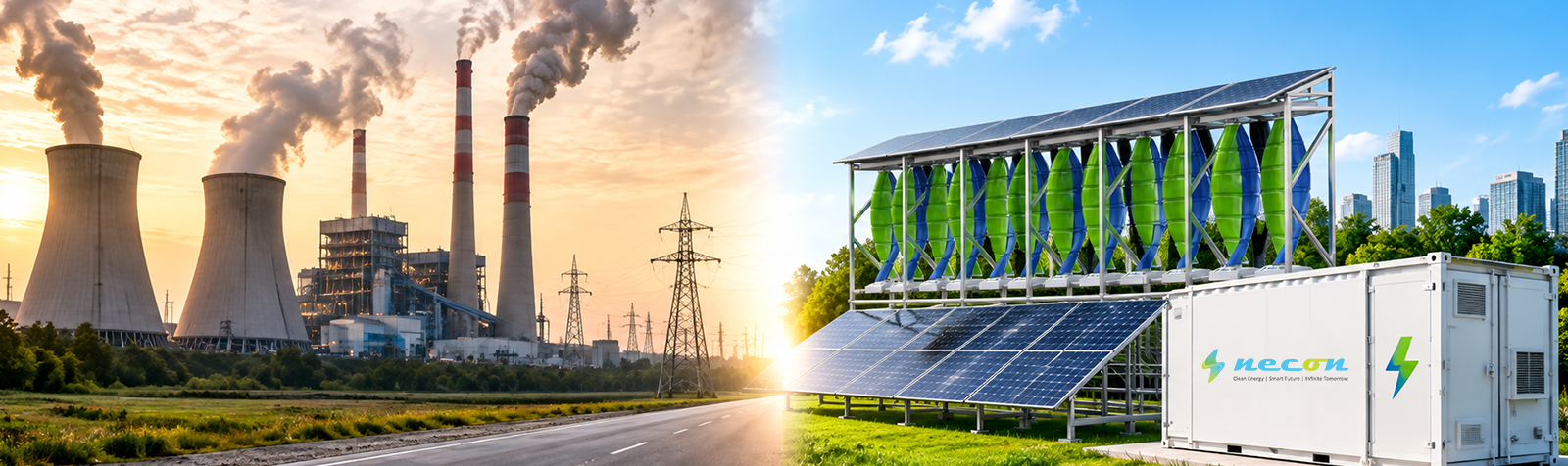
How NECON is contributing to India’s renewable energy future
India’s renewable energy future is not only about adding more solar and wind capacity. It is about building clean power systems that stay reliable, integrate smoothly with the grid, and support real industrial demand.
That is where companies like NECON play a critical role. NECON is building an integrated clean energy ecosystem that brings together wind, solar, storage, and end-to-end project delivery to help customers move from “renewable energy availability” to “renewable energy confidence”.
This article explains how NECON is contributing to India’s renewable journey through technology, manufacturing, project execution, and long-term performance.
India’s renewable energy future needs reliability at scale
India has set ambitious clean energy goals for 2030 and meeting them requires more than generation alone. It requires:
well-planned transmission corridors to move power from high-resource zones to demand centers
storage to smooth variability and support peak demand
hybrid solutions that deliver power across day, night, and seasons
The Government of India has highlighted this need through transmission planning for integrating 500 GW of non-fossil capacity by 2030, including a broader plan supporting around 537 GW of renewable energy capacity by 2030. Read the official update here: transmission planning for 500 GW by 2030 (PIB).
India’s climate commitments are also captured in official Nationally Determined Contribution documents, including this direct PDF: India updated first NDC (UNFCCC PDF).
NECON’s contribution fits directly into these needs by focusing on hybrid systems, storage integration, and end-to-end delivery.
NECON’s mission: build dependable clean energy systems
NECON describes itself as a “New Energy Consortium” built to solve complex power challenges such as intermittent renewable supply and the need for solutions that work at scale in India. The company states it brings together wind, solar, hydrogen, and advanced energy storage in one integrated ecosystem, combined with services like EPC and O&M. See NECON’s mission and vision.
This is a practical mindset. Many customers do not buy solar or wind as standalone technologies. They buy energy outcomes.
predictable power supply
stable costs
lower lifecycle risk
a partner that can deliver and maintain performance
How NECON is contributing through key capability areas
1) Hybrid power parks that combine solar, wind, and storage
Hybridization is one of the fastest ways to improve reliability. Solar is strong during the day. Wind can complement it in many regions. Battery storage can fill gaps and reduce fluctuations.
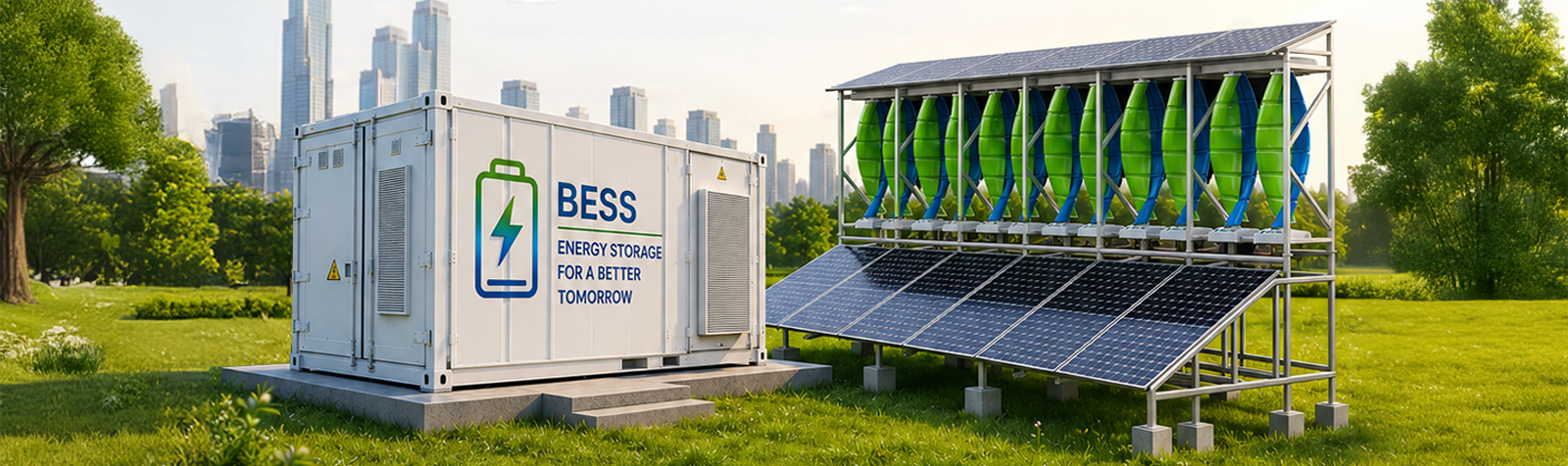
NECON’s approach is built around hybrid energy parks that integrate solar generation, wind generation, and Battery Energy Storage Systems to move toward more consistent clean power. Learn more about NECON’s hybrid model here: hybrid power parks for round-the-clock clean power.
2) Solar solutions built for utility-scale and hybrid environments
Solar power remains one of the most scalable clean energy sources in India. But utility scale performance depends on engineering, quality, and long-term stability, not only nameplate watts.
NECON highlights an engineering-first solar approach focused on reliability and long-term value, designed to integrate with wind and storage systems. See NECON solar power parks and solar modules.
3) Vertical axis wind technology designed for real-world conditions
Wind is essential to India’s clean energy mix, especially for balancing solar-heavy portfolios.
NECON’s vertical axis wind approach is positioned for variable wind conditions and hybrid integration. For example, NECON notes low wind speed operation and system integration with solar and storage as part of its design philosophy. See vertical axis windmill and wind integration.
4) Battery storage integration for grid stability and dispatchable power
As renewable penetration grows, storage becomes a key enabler of grid stability and peak support.
Battery Energy Storage Systems help shift energy to high-demand hours, reduce curtailment risk, and provide a more predictable supply profile. This is increasingly aligned with national priorities, with MNRE maintaining policies and guidelines related to energy storage. See MNRE energy storage systems policies and guidelines.
NECON positions storage as a core part of its 360-degree energy value chain.
5) End-to-end delivery: from EPC to O&M
Large renewable projects only succeed when engineering and execution meet on-ground realities.
NECON presents itself as a full lifecycle partner, including:
EPC delivery for end-to-end build
O&M focus for long-term system performance
This partner model matters because buyers need reliable energy for decades, not only a successful commissioning date.
6) Innovation-led engineering and continuous improvement
NECON states that innovation is embedded as a mindset and that R&D is field-driven and designed to improve reliability over time. Learn more about this approach here: innovation and technologies at NECON.
For India’s renewable future, this kind of continuous improvement is important because:
sites vary widely by geography and climate
grid conditions are changing as RE penetration increases
long-term performance must stay stable under heat, dust, storms, and variable loads
7) Building a scalable ecosystem through group companies
NECON also outlines a network of companies supporting development, manufacturing, and operations across its ecosystem. See NECON group of companies.
This type of structure can support faster scaling, more localized execution, and better alignment between product manufacturing and project delivery.
Sustainability: decarbonization outcomes, not only electricity
Renewable energy is ultimately about impact. NECON positions sustainability as part of its wider commitment to responsible clean energy progress. Learn more here: NECON sustainability.
For commercial and industrial buyers, this sustainability angle is also tied to measurable business outcomes:
lower Scope 2 emissions from electricity
improved ESG reporting readiness
stronger resilience against energy price volatility
Conclusion
India’s renewable future will be defined by speed, reliability, and integration.
NECON’s contribution sits at the intersection of these priorities by focusing on:
hybrid wind and solar systems
storage integration for stability and peak support
end-to-end delivery and long-term performance
Make in India-oriented engineering and ecosystem building
As India accelerates toward 2030 and beyond, the winners will be the solutions that deliver clean power with confidence. NECON is building toward that outcome through partner-oriented project execution and future-ready energy systems.
Talk to NECON
If you are planning a utility-scale renewable project, a hybrid power park, or a storage-backed clean energy system, connect with NECON here: reach us.