Renewable energy is a growing part of India's electricity mix. But clean generation is only half the challenge.
Solar power changes with daylight and weather. Wind power changes with wind speed. Battery Energy Storage Systems (BESS) solve this problem. They store electricity when it's available. They release it when it's needed.
For NECON, battery storage isn't a standalone product. It's one part of a bigger system. That system combines solar, wind, battery storage, energy management, EPC, and long-term operations and maintenance. Together, they create more reliable clean-energy projects.
NECON, short for New Energy Consortium, builds integrated renewable energy solutions. These are designed around India's energy needs, geography, climate, and operating conditions. You can read more about the company's mission on Our Story.
What Is a Battery Energy Storage System (BESS)?
A BESS stores electrical energy in rechargeable batteries. It releases that energy when needed.
In renewable energy projects, BESS stores surplus electricity. This happens during periods of high solar or wind output. Later, it discharges that power when generation drops or demand rises.
A complete BESS typically includes:
Battery modules
Battery Management System (BMS)
Power Conversion System (PCS)
Energy Management System (EMS)
Thermal management
Monitoring and safety systems
Together, these parts let stored electricity be monitored, controlled, converted, and delivered as needed.
The basic cycle: Generate → Store → Monitor → Dispatch
This ability to shift electricity from one period to another is what makes BESS so valuable for renewable energy.
How Does a Battery Energy Storage System Work?
A BESS works in four basic stages:
Renewable energy generation. Solar panels and wind turbines generate electricity whenever conditions allow.
Energy storage. When generation is higher than demand, the surplus goes into the BESS.
Monitoring and management. The BMS watches battery conditions. The EMS decides when to store or discharge energy.
Energy discharge. When generation drops or demand rises, the stored electricity is converted and sent to the grid or load.
The exact strategy depends on the project. Factors include generation profile, demand pattern, battery capacity, power rating, grid requirements, and control setup.
Why Is BESS Important for Renewable Energy?
Solar and wind are renewable, but their output isn't constant.
Solar power drops after sunset and dips under cloud cover. Wind power shifts with wind speed and conditions. BESS bridges these gaps by storing electricity for later use.
For renewable projects, this can support:
Time-shifting renewable energy
More predictable power delivery
Peak demand management
Renewable energy integration
Grid support
Less reliance on conventional backup, where suitable
Better use of renewable generation
In short: BESS helps move renewable systems from simply generating power to managing when that power is available.
How BESS Supports NECON's Hybrid Power Parks
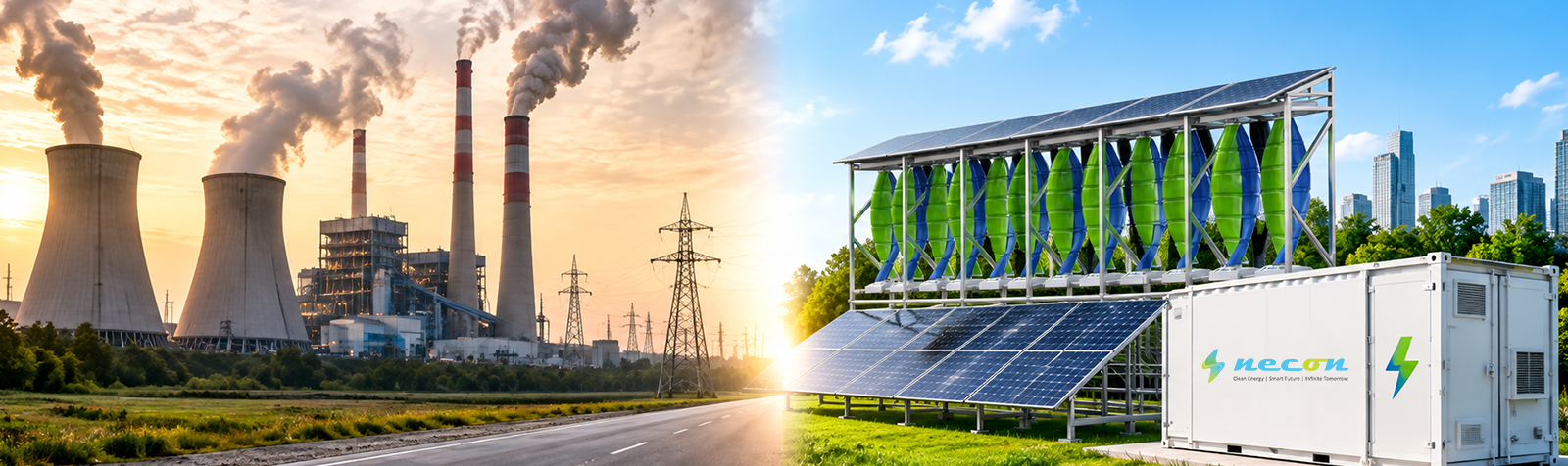
NECON's hybrid power parks combine multiple renewable technologies. They don't rely on a single power source.
The model brings together:
Solar power
Wind power, including Vertical Axis Wind Turbines (VAWT)
Battery Energy Storage Systems
Intelligent energy management
EPC capabilities
Operations and maintenance
NECON designs these hybrid parks to deliver clean power beyond the operating hours of any single technology.
The basic idea is simple: solar generates during daylight, wind can add power at other times, BESS stores the surplus, and the control system manages the balance between generation, storage, and demand.
This combined approach creates a steadier power profile than relying on one technology alone. NECON builds its hybrid model around three goals: 24/7 clean power availability, higher energy yield and land use, and peak shaving with load management.
Why Battery Storage Matters for India's Renewable Energy Future
India's renewable capacity is growing fast. That growth creates a bigger need for technology that can manage variability and match supply with demand.
More solar and wind capacity means more clean electricity. But it also makes storage and grid flexibility more important. BESS helps by letting electricity generated in one period be used in another.
For Indian projects, storage can support:
Solar-plus-storage projects
Wind-plus-storage projects
Hybrid renewable power parks
Industrial energy systems
Commercial facilities
Microgrids
Rural and distributed energy systems
Grid-support applications
NECON designs its systems around India's geography, climate, and energy needs, with storage built in alongside solar and wind from the start.
Key Components of a BESS
A modern BESS is more than a group of batteries. It's a coordinated electrical, mechanical, digital, and safety system.
Battery Modules
Battery modules store energy in chemical form and release it as electricity when needed. The right capacity and setup depend on the project's energy needs, discharge duration, and expected use.
Power Conversion System (PCS)
Batteries store energy as direct current (DC). Most grids and loads run on alternating current (AC). The PCS converts power between the two.
While charging: it converts incoming electricity into the form the battery needs.
While discharging: it converts stored DC power into usable AC power.
Battery Management System (BMS)
The BMS monitors battery health and conditions. It can track:
Voltage
Temperature
State of charge
Overall operating condition
Cell and module performance
This keeps the battery running safely and helps it last longer.
Energy Management System (EMS)
The EMS is the system's higher-level "brain." It coordinates:
Renewable generation
Battery charging and discharging
Load requirements
Grid conditions
Energy dispatch strategy
The EMS decides how to use available energy based on the project's goals.
Thermal Management
Temperature affects both battery performance and safety. Thermal management systems keep batteries within a safe temperature range during charging and discharging.
Monitoring and Safety Systems
Every BESS needs monitoring and protection systems. These catch abnormal conditions early and keep the system operating safely. The exact safety design depends on battery chemistry, system size, and local standards.
What Are the Benefits of Battery Energy Storage Systems?
The benefits below depend on how a system is designed and used.
Renewable energy time shifting: Store surplus solar power from the afternoon and use it later when demand is higher.
Peak demand management: Use stored power during high-demand periods. This can lower costs where the tariff structure supports it.
Better renewable integration: BESS smooths out fluctuations, making it easier to add renewable power to the wider grid.
Improved energy resilience: Depending on setup, BESS can provide backup power for critical loads during outages. Backup duration depends on battery capacity, power demand, and system design.
Grid support: Large-scale BESS can help with grid balancing and frequency services, where allowed by local grid rules.
Better use of renewable generation: Instead of using solar or wind power only as it's generated, storage adds an option: save it and use it when it's needed most.
BESS Applications Across Renewable Energy and Industry
BESS applications vary by size, location, and purpose.
Utility-scale hybrid power parks: Large projects combine solar, wind, and BESS for a more flexible generation mix. NECON's hybrid power park model brings these together with energy management and project delivery.
Industrial facilities: Manufacturing and other energy-heavy operations can use BESS for peak demand management, better renewable use, and backup for key loads.
Commercial facilities: Commercial buildings can pair renewable generation with storage to get more value from on-site power.
Rural and distributed energy systems: Where grid access is limited, well-designed renewable-plus-storage systems add flexibility in how power is generated and used.
Grid support: At larger scales, BESS helps grids handle a growing share of variable renewable power.
NECON's Integrated Approach to Battery Energy Storage
A standalone battery system is different from one built into a full renewable energy project.
NECON brings together solar, wind, BESS, EPC, O&M, and digital infrastructure as one system, not as separate parts. This lets project planning account for:
Renewable generation profiles
Energy demand
Storage requirements
Grid conditions
Power conversion
Energy management
Construction
Long-term operations and maintenance
NECON's solar solutions are also built to work with wind and battery systems in hybrid deployments. The result: generation, storage, control, and operations are planned together from day one.
Digital Security and System Reliability
Modern energy infrastructure depends heavily on digital monitoring and control.
BESS and hybrid systems involve metering, communication networks, monitoring platforms, and automated controls. NECON builds its infrastructure with:
Encrypted metering
Anomaly detection
Redundant, fault-tolerant digital systems
Cybersecurity measures
This matters because reliable energy infrastructure has to protect both the physical equipment and the digital systems that run it.
BESS, Solar and Wind: Why Integration Matters
A renewable system becomes more flexible when its technologies work together.
Solar: Strongest during daylight hours, often producing surplus power beyond immediate demand.
Wind: Can complement solar depending on local conditions. NECON's portfolio includes Vertical Axis Wind Turbine technology built for hybrid systems.
BESS: Stores electricity and dispatches it later.
EMS: Coordinates generation, storage, and demand across the system.
Together, these technologies form one integrated energy system, not a set of separate assets.
How NECON Supports the Renewable Energy Project Lifecycle
Battery storage delivers the most value when it's properly integrated into the full project. NECON's capabilities span the entire value chain:
EPC (Engineering, Procurement and Construction): end-to-end project delivery, from design to commissioning.
O&M (Operations and Maintenance): ongoing monitoring, preventive maintenance, and performance optimization.
Battery Energy Storage: a core part of NECON's renewable energy ecosystem.
Manufacturing and Innovation: in-house R&D through NECON's Innovation and Technologies initiatives, supporting its wind, solar, and storage products.
This broader ecosystem connects technology development, project execution, manufacturing, and long-term asset management.
Why NECON's Make-in-India Approach Matters
NECON's mission is Make-in-India, Make-for-India. The belief: India deserves reliable, affordable power built through Indian engineering and manufacturing.
For battery storage and hybrid renewable infrastructure, local engineering matters for:
Project customization
Supply-chain resilience
Local technical support
Deployment at scale
Long-term asset management
India-specific energy solutions
Building More Flexible Renewable Energy Systems
The future of renewable energy isn't just about generating more electricity. It's about building systems that can generate, store, manage, and deliver clean power exactly when it's needed.
BESS is a key part of that shift. By combining it with solar, wind, energy management, EPC, and long-term operations, hybrid renewable projects become more flexible and better equipped to handle variable generation.
NECON's integrated approach brings all of this together, building reliable, scalable clean-energy infrastructure for India.
Explore NECON's Hybrid Renewable Energy Solutions
If you're evaluating a BESS, hybrid power park, solar-plus-storage project, or any integrated renewable energy solution, NECON can help assess your generation, storage, delivery, and operational needs.
About NECON
NECON (New Energy Consortium) is an India-focused renewable energy company. It builds integrated solutions across solar, wind, hybrid power parks, battery energy storage, EPC, O&M, and other clean-energy technologies, all built on a Make-in-India approach to engineering, manufacturing, and innovation.
Frequently Asked Questions
What is a Battery Energy Storage System (BESS)?
A BESS stores electrical energy in rechargeable batteries and releases it when needed. In renewable projects, it stores surplus solar or wind power and dispatches it later.
How does BESS work with solar power?
BESS stores surplus solar electricity when generation exceeds demand. It releases that stored energy later when solar output drops or demand rises.
How does BESS support wind energy?
BESS stores electricity from wind turbines and releases it as needed. This helps manage swings in wind generation and supports a more flexible system.
What are the main components of a BESS?
Battery modules, a Battery Management System (BMS), a Power Conversion System (PCS), an Energy Management System (EMS), thermal management, monitoring systems, and safety infrastructure.
What's the difference between BESS and a backup battery?
A BESS is a complete system: batteries plus power conversion, monitoring, management, and safety. A backup battery usually just refers to a battery or battery bank for emergency power.
Can BESS be used for industrial facilities?
Yes, BESS can support renewable integration, peak demand management, energy shifting, and backup power for industrial sites, depending on their setup.
How long can a BESS supply electricity?
It depends on the battery's usable energy capacity, power rating, operating conditions, and system design. There's no single answer that fits every installation.
How does NECON use BESS?
NECON integrates BESS with solar, wind, hybrid power parks, energy management systems, EPC capabilities, and O&M as part of its broader renewable energy ecosystem.