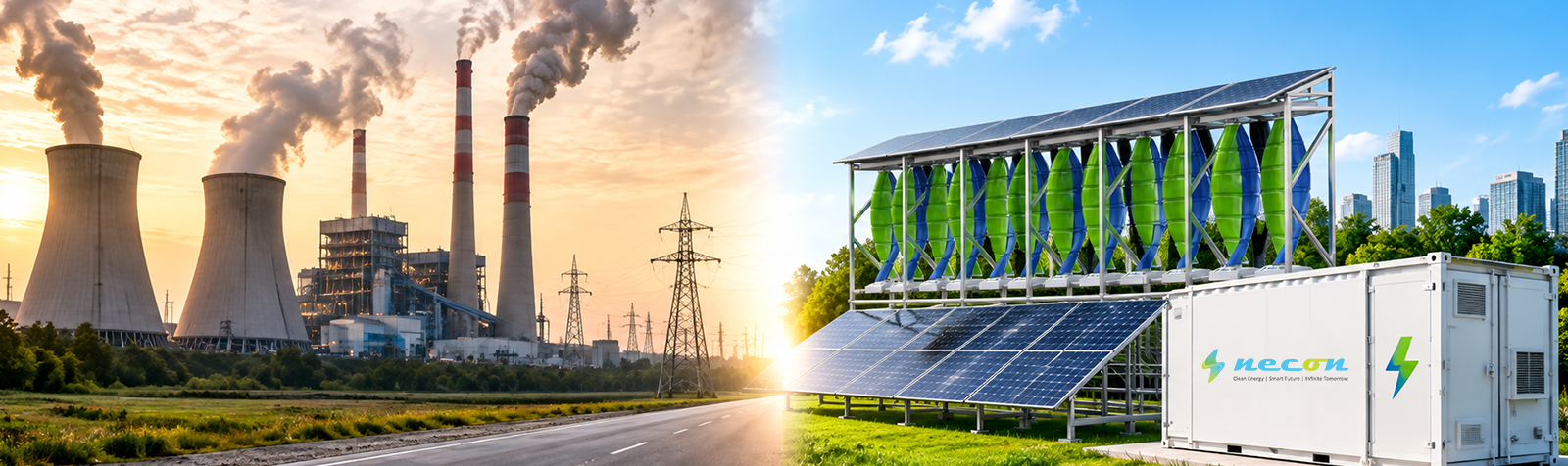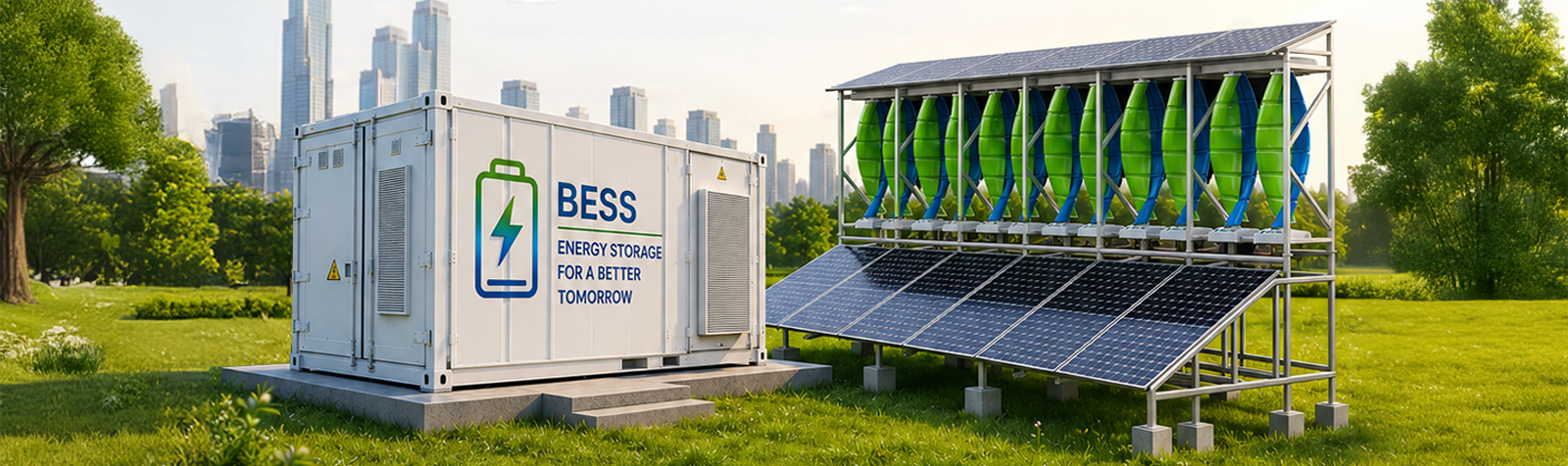
NECON manufactures solar modules in-house to maintain greater control over module quality, manufacturing consistency, supply reliability, and system integration. By combining solar module manufacturing with renewable energy engineering, EPC, operations and maintenance, wind power, and battery energy storage, NECON can design solar components as part of an integrated hybrid energy system rather than treating them as standalone products.
What Is In-House Solar Panel Manufacturing?
In-house solar panel manufacturing means producing solar modules within the same organization that develops, engineers, or operates the renewable energy projects where those modules are deployed.
Instead of relying entirely on third-party suppliers, an integrated renewable energy company can control important stages of module production, including cell interconnection, soldering, lamination, construction, testing, and quality assurance.
For large-scale renewable energy projects, this approach can provide greater control over product specifications, quality standards, supply planning, and integration with the wider energy system.
For NECON, solar manufacturing is part of a broader approach to developing integrated renewable energy solutions across solar, wind, battery energy storage, EPC, and operations and maintenance.
Why Does In-House Manufacturing Matter for Hybrid Power Parks?
A conventional solar project can often operate effectively with modules sourced from an external manufacturer. However, the engineering requirements become more complex when solar generation operates alongside wind power and battery energy storage.
NECON's hybrid energy systems are designed as an integrated ecosystem in which solar, wind, and battery storage work together to support reliable clean-power generation.
This makes the solar module more than an individual component. Its efficiency, degradation characteristics, durability, and performance in different environmental conditions can influence the overall performance of the hybrid system.
By combining module manufacturing with system engineering, NECON can approach the solar component with the requirements of the complete project in mind.
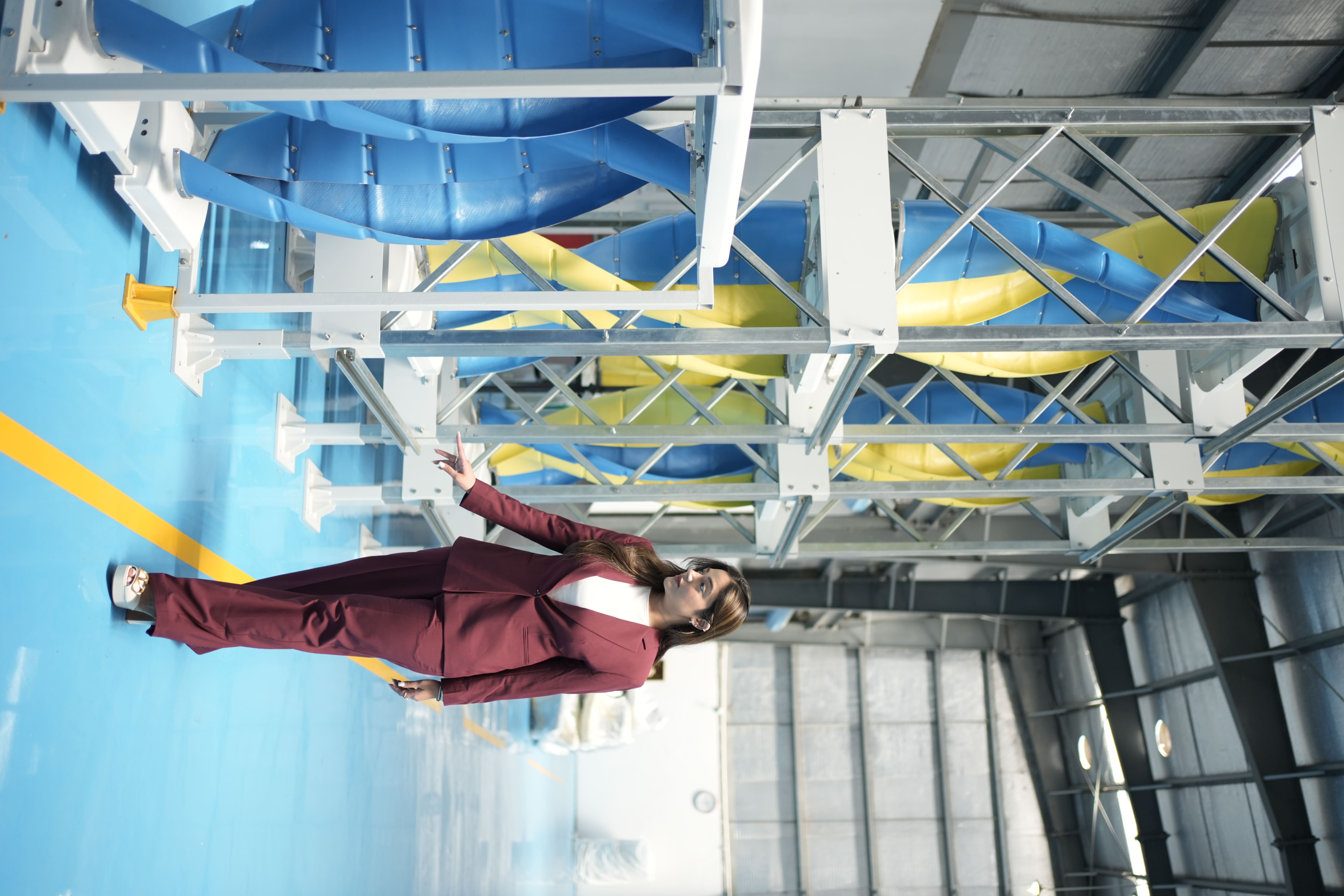
How NECON Manufactures Solar Modules In-House
NECON's solar solutions are supported by in-house R&D, advanced manufacturing capabilities and technologies, and quality-control processes designed around long-term reliability.
Key manufacturing and testing processes include:
Automated Cell Interconnection and SMBB Soldering
Automated cell interconnection and SMBB (Super Multi-Busbar) soldering help create consistent electrical connections across the module while reducing variations associated with manual assembly.
Consistent interconnection is important for maintaining module performance and minimizing electrical losses during operation.
Automated Lamination
Lamination is a critical stage in solar module manufacturing because it helps protect the internal components from environmental exposure.
NECON uses automated lamination processes to improve manufacturing consistency across module batches and support long-term module durability.
Glass-to-Glass Module Construction
Glass-to-glass construction provides additional protection for the module structure and can improve resistance to moisture and demanding environmental conditions.
This construction approach is particularly relevant for projects where solar modules are expected to operate reliably over long service periods.
Comprehensive Quality Assurance
Solar modules need to withstand a range of environmental and operating conditions throughout their service life.
NECON's quality-assurance processes include testing related to:
Thermal cycling
Potential-induced degradation (PID)
Hail resistance
Mechanical loading
Wind resistance
Overall module quality and reliability
Testing at the manufacturing stage helps ensure that modules meet the required quality and performance standards before deployment.
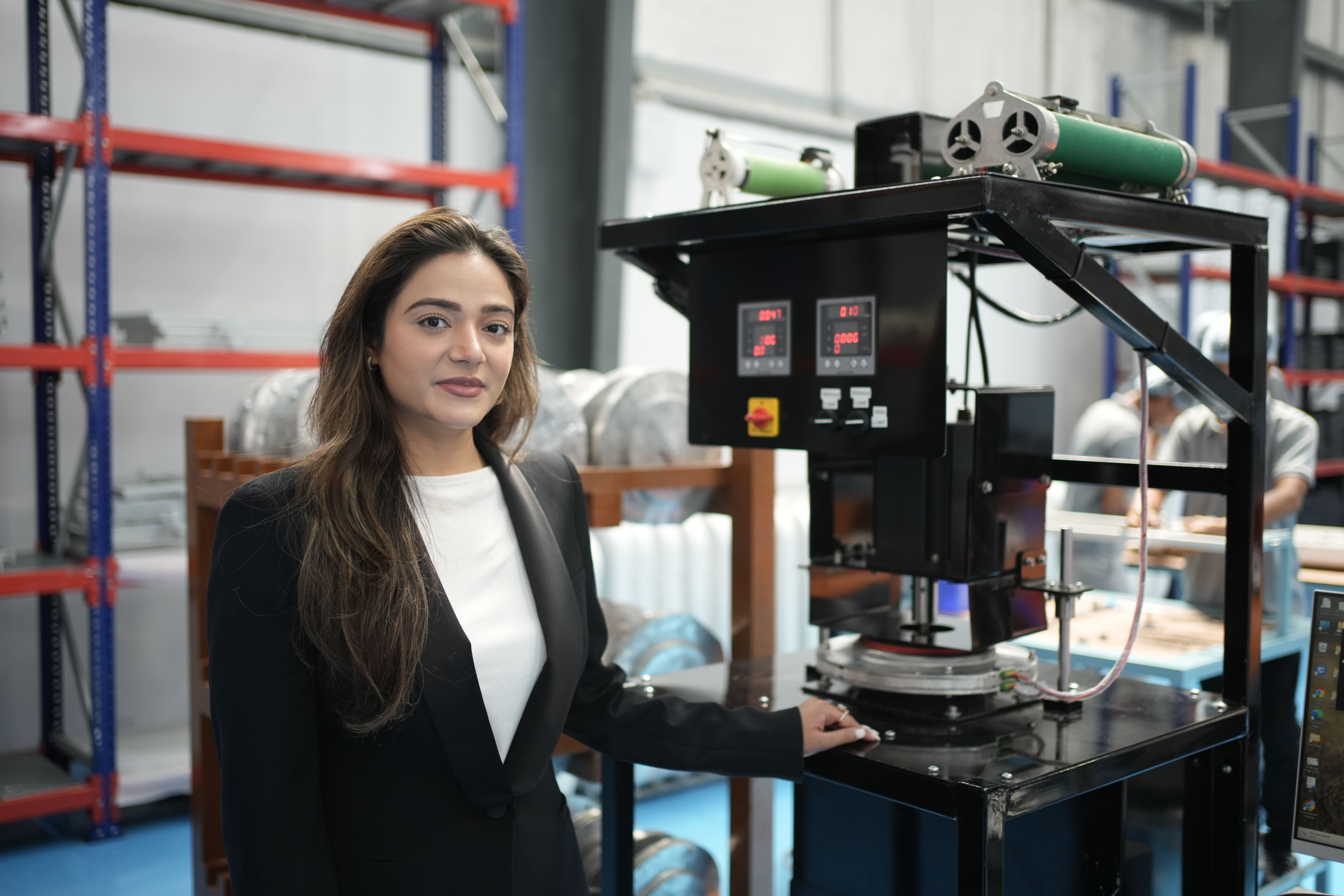
NECON Solar Module Technologies
NECON manufactures different solar module configurations for different project requirements, from large utility-scale and hybrid power projects to rooftops and space-constrained installations.
N-Type TOPCon Bifacial Solar Modules
NECON's N-type TOPCon bifacial module range is designed for utility-scale solar projects and hybrid power parks.
The range provides 560 Wp to 590 Wp of module output, with rated efficiency reaching 22.80%.
Bifacial technology allows the module to generate electricity from light reaching both sides of the module, making it particularly relevant for applications where site conditions and project design can support additional rear-side energy generation.
Mono-PERC Half-Cut Solar Modules
NECON also manufactures 390 Wp to 410 Wp mono-PERC half-cut modules for applications including rooftop installations and space-constrained ground-mounted projects.
The half-cut configuration is designed to support efficient electrical performance while providing a practical module option for projects with different space and deployment requirements.
NECON Solar Module Specifications
Feature | N-Type TOPCon Bifacial | Mono-PERC Half-Cut |
Power range | 560 to 590 Wp | 390 to 410 Wp |
Technology | N-type TOPCon | Mono-PERC |
Configuration | Bifacial | Half-cut |
Rated efficiency | Up to 22.80% | Not specified |
Typical applications | Utility-scale and hybrid power parks | Rooftop and space-constrained projects |
Linear performance warranty | 30 years | 30 years |
Product warranty | 12 years | 12 years |
Both module families are manufactured according to applicable ISO and IEC standards.
Benefits of NECON's Integrated Manufacturing Approach
1. Quality Control From Manufacturing to Commissioning
When solar manufacturing, engineering, EPC, and operations are part of the same organization, quality requirements can be coordinated across different stages of a project's lifecycle.
Instead of treating module quality as a supplier-only responsibility, an integrated approach allows manufacturing and project teams to work toward common technical and performance requirements.
NECON's integrated operations are supported by ISO 9001:2015, ISO 14001:2015, and ISO 45001:2018 certifications.
2. Solar Modules Designed With Hybrid Performance in Mind
A solar module used in a hybrid power park operates within a broader energy system.
Factors such as bifacial energy gain, thermal performance, degradation, durability, and long-term output can influence how effectively solar generation contributes alongside wind generation and battery storage.
Having manufacturing and system engineering capabilities within the same organization creates an opportunity to consider these requirements together rather than adapting a generic module to a project after the fact.
3. Greater Supply Reliability at Utility Scale
Large renewable energy projects require predictable quantities of components over defined project schedules.
In-house manufacturing can reduce dependence on external supply chains and provide greater control over production planning and module availability.
This becomes particularly valuable for utility-scale and hybrid projects where delays in component supply can affect construction and commissioning schedules.
4. Better Land and Energy Yield Efficiency
For large-scale solar and hybrid projects, maximizing energy production from available land is an important consideration.
Module-level decisions such as bifacial architecture, power output, efficiency, and degradation characteristics can influence the energy yield that a project achieves from its available site.
Integrating manufacturing and project engineering allows these factors to be considered together during system design.
5. Integration Across the Renewable Energy Value Chain
Solar module manufacturing is one part of NECON's broader renewable energy ecosystem.
The company operates across areas including:
Hybrid power parks
Battery Energy Storage Systems (BESS)
EPC
Operations and maintenance
Carbon trading
This vertical integration allows NECON to approach renewable energy projects from multiple stages of the value chain rather than focusing on a single technology or component.
NECON Solar Manufacturing at a Glance
Manufacturing: In-house solar module production
Primary technologies: N-type TOPCon bifacial and mono-PERC half-cut
TOPCon power range: 560 to 590 Wp
TOPCon rated efficiency: Up to 22.80%
Applications: Utility-scale, hybrid power parks, rooftops, and space-constrained projects
Performance warranty: 30-year linear performance warranty
Product warranty: 12 years
Quality framework: ISO and IEC standards
Energy ecosystem: Solar, wind, battery storage, EPC, and O&M
How Solar Manufacturing Fits Into the NECON Ecosystem
NECON's in-house solar manufacturing capability is not an isolated manufacturing operation. It forms part of a wider renewable energy ecosystem.
At one end of that ecosystem is solar module manufacturing. At the other are large-scale renewable energy projects that combine different technologies to meet specific energy requirements.
Between those two points are capabilities such as engineering, EPC, operations and maintenance, battery energy storage, and hybrid system design.
This creates a connected value chain:
Solar Manufacturing → Solar Power → Wind Power → Battery Storage → Hybrid Energy Systems → EPC → Operations & Maintenance
The result is a more integrated approach to renewable energy project development.
Rather than simply purchasing a solar module and adding it to a project, NECON can consider the module within the context of the complete energy system.
Why Vertical Integration Matters for India's Renewable Energy Future
India's renewable energy sector is expanding rapidly, increasing the need for technologies that can deliver reliable energy at scale.
Solar generation is a major part of this transition, but combining different renewable technologies with energy storage can help address the variable nature of individual generation sources.
Hybrid renewable energy systems bring together technologies such as solar, wind, and battery storage to create a more coordinated generation and storage solution.
In this environment, vertical integration can become strategically important.
Control over solar module manufacturing gives NECON greater visibility into the technology that forms one of the core components of its renewable energy projects.
Combined with its capabilities in engineering, EPC, operations and maintenance, wind, and battery storage, this supports NECON's broader objective of building integrated clean-energy systems.
Building a More Integrated Renewable Energy Future
In-house solar manufacturing is more than another product capability for Necon. It is part of a broader strategy to integrate renewable energy technologies across the value chain.
By combining solar module manufacturing with solar power, wind energy, battery storage, EPC, and operations and maintenance, Necon can approach renewable energy projects as complete systems rather than collections of independent technologies.
For large-scale hybrid power projects, that integrated approach can provide greater control over quality, technology, supply planning, and system engineering.
Necon Renewable Energy designs, manufactures, and operates renewable energy systems across the solar, wind, and battery storage value chain.
Explore Necon's solar power parks and hybrid power parks to learn more about its integrated renewable energy solutions.
Frequently Asked Questions
What is in-house solar panel manufacturing?
In-house solar panel manufacturing is the production of solar modules within the same organization that develops or deploys renewable energy projects. It can provide greater control over manufacturing processes, quality standards, product specifications, and supply planning.
Why does Necon manufacture solar modules in-house?
Necon manufactures solar modules in-house to strengthen control over module quality, manufacturing consistency, supply reliability, and integration with its broader renewable energy systems.
What solar module technologies does Necon manufacture?
Necon manufactures N-type TOPCon bifacial solar modules in the 560 to 590 Wp range and mono-PERC half-cut modules in the 390 to 410 Wp range for different project applications.
What are bifacial solar modules?
Bifacial solar modules can generate electricity from sunlight reaching both the front and rear sides of the module. Their potential energy gain depends on factors such as installation design, ground reflectivity, mounting configuration, and site conditions.
Where can Necon solar modules be used?
Necon's solar modules are designed for applications including utility-scale solar projects, hybrid power parks, rooftops, and space-constrained ground-mounted installations.
How does solar manufacturing support hybrid power parks?
In-house solar manufacturing allows the manufacturing and engineering teams to consider module characteristics such as efficiency, durability, bifacial performance, and degradation alongside the requirements of solar, wind, and battery storage systems.