The main difference between a grid-connected (on-grid) solar system and an off-grid solar system is how the system handles electricity when solar generation is lower than demand. A grid-connected system remains connected to the utility grid and can import or export electricity, while an off-grid system operates independently and depends on battery storage. A hybrid solar system combines grid connection with battery storage to provide both energy savings and backup power.
For most locations with a reliable electricity connection, grid-connected solar is the simpler and lower-cost option. Off-grid solar makes more sense where grid electricity is unavailable or unreliable. Hybrid systems are useful when reducing electricity costs and maintaining backup power are both priorities.
The right choice depends on four things: grid availability, electricity consumption, backup requirements, and the economics of battery storage.
Grid-Connected vs Off-Grid Solar: Quick Comparison
Feature | Grid-Connected / On-Grid | Off-Grid | Hybrid |
Connection to electricity grid | Yes | No | Yes |
Battery required | No, for the basic system | Yes | Yes |
Uses utility grid | Yes | No | Yes |
Exports surplus solar | Subject to applicable regulations and metering arrangement | No | May be possible, depending on system and local regulations |
Works during grid outage | Standard grid-tied system shuts down | Yes | Yes, for backed-up loads |
Upfront cost | Lower | Higher | Higher than basic on-grid |
Battery replacement cost | None in basic configuration | Yes | Yes |
Best suited for | Locations with reliable grid supply | Remote or grid-independent applications | Sites needing savings plus backup |
The key point is simple: on-grid uses the electricity grid to balance generation and demand; off-grid uses batteries; hybrid uses both the grid and batteries.
What Is a Grid-Connected Solar System?
A grid-connected solar system, also called an on-grid or grid-tied solar system, is connected to the local electricity distribution network.
Solar panels generate DC electricity during sunlight hours. A solar inverter converts that electricity into AC power for the building. Electricity is consumed on site first. When solar generation is greater than the immediate load, surplus electricity can be exported to the grid under the applicable metering arrangement.
When solar generation is insufficient, such as at night or during low-sunlight conditions, the property can draw electricity from the grid.
How an On-Grid Solar System Works
The basic flow is: solar panels to inverter to building loads, with surplus exported to grid. When solar generation is insufficient, power flows from the grid to building loads.
This arrangement reduces the need for battery storage because the grid effectively provides the balancing source for periods when solar generation does not match demand.
Main Components of an On-Grid System
• Solar PV modules
• Grid-tied inverter
• Mounting structure
• Electrical protection equipment
• Cabling and balance-of-system components
• Appropriate bidirectional or net-metering arrangement, where permitted
• Monitoring system
A basic on-grid system does not require a battery bank.
Does an On-Grid Solar System Work During a Power Cut?
Normally, no.
A standard grid-tied inverter is designed to stop supplying the grid when the utility grid fails. This anti-islanding function prevents the solar installation from continuing to energize a circuit that utility personnel may be working on.
This creates one of the most important distinctions between on-grid and off-grid solar: a solar panel can still receive sunlight during a blackout, but a standard grid-tied system cannot simply continue powering the building independently.
Battery storage and appropriate backup-capable equipment are required when power must continue during an outage.
That is why a system designed for both grid interaction and backup is normally considered a hybrid or battery-backed configuration, rather than a basic on-grid system.
What Is an Off-Grid Solar System?
An off-grid solar system is completely independent of the public electricity grid.
Instead of sending surplus power to the grid, the system uses batteries to store energy for periods when solar generation is low or unavailable.
A typical operating sequence is: solar panels to charge controller to batteries to inverter to electrical loads.
During the day, solar generation supplies the load and charges the battery system. At night, during cloudy weather, or whenever solar output falls below demand, stored energy is used to supply the loads.
Because there is no utility grid available as a fallback, an off-grid system has to be designed around the actual electricity demand of the site.
When Is an Off-Grid Solar System a Good Choice?
Off-grid solar can be particularly useful for locations where grid infrastructure is unavailable, difficult to extend, or unsuitable for the application. Examples can include:
• Remote homes and rural properties
• Agricultural and farm applications
• Telecom infrastructure
• Remote monitoring stations
• Construction and temporary sites
• Defence or high-altitude locations
• Isolated commercial or industrial facilities
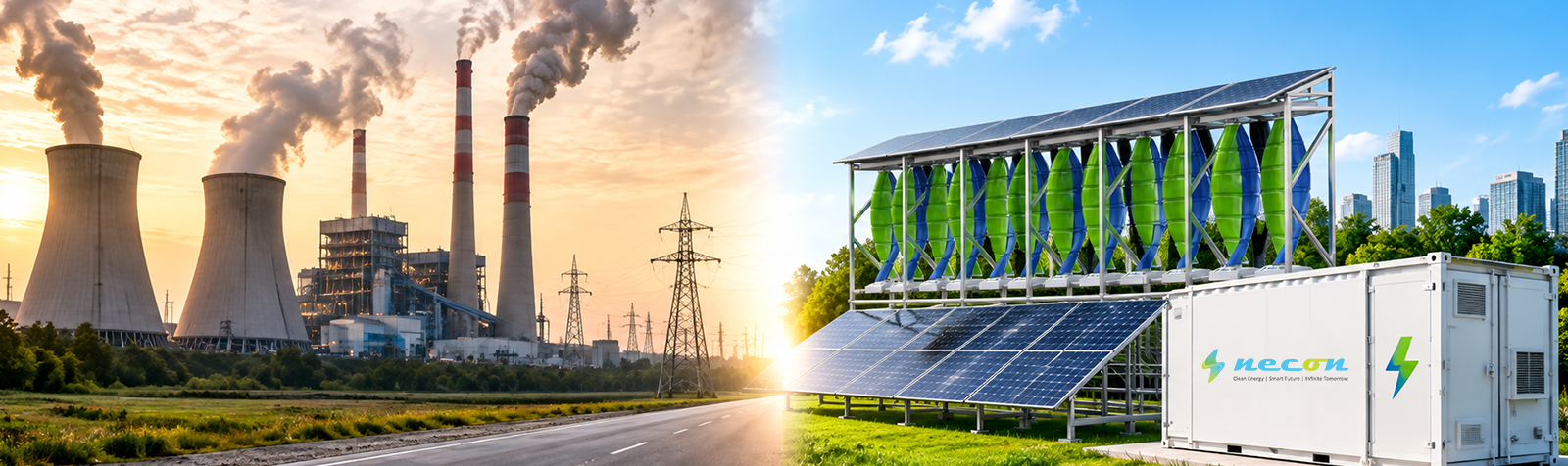
Vertical-axis wind technology can also be integrated with solar and battery storage in these off-grid or remote configurations, where site conditions support a combined renewable setup rather than solar alone.
Why Does Off-Grid Solar Cost More?
The major difference is energy storage.
An off-grid system must produce enough electricity not only for the current load but also for periods when solar generation is insufficient. That means the system designer has to consider:
• Daily energy consumption
• Peak electrical load
• Night-time demand
• Days of autonomy required
• Seasonal changes in solar generation
• Battery usable capacity
• Inverter power rating
• Critical versus non-critical loads
A poorly sized off-grid system can create practical problems even when the solar panels themselves are high quality. For this reason, off-grid design should begin with a proper load assessment and energy profile, not simply a decision based on the number of solar panels required.
What Is a Hybrid Solar System?
A hybrid solar system combines a grid connection with battery storage. It can use solar generation for the building load, store some energy in batteries, interact with the grid when required, and provide backup power when the utility supply is unavailable.
A simplified energy flow looks like this: solar, grid, and battery feed into an energy management layer, which supplies the loads. The exact operating strategy depends on the inverter, battery size, electrical configuration, load priority, metering arrangement, and applicable regulations.
Why Choose Hybrid Solar?
Hybrid systems are useful when the site has a functioning grid connection but cannot afford to lose power during interruptions. For example, a facility may use solar during the day, battery storage for selected loads, grid electricity when required, solar charging for the battery, and grid charging where permitted by the system design.
The important advantage is flexibility. Instead of choosing between complete grid dependence and complete grid independence, a hybrid system can be engineered around the site's actual reliability and energy requirements.
On-Grid vs Off-Grid vs Hybrid: Which Is Better?
There is no universal winner. The right configuration depends on what matters most to the site.
Choose Grid-Connected Solar When:
• The electricity grid is already available
• Grid reliability is acceptable
• The main objective is reducing electricity bills
• Lower upfront cost is important
• Battery storage is not required
• The site can operate without solar power during a grid outage
For many grid-connected residential and commercial applications, this is the simplest solar architecture.
Choose Off-Grid Solar When:
• There is no practical grid connection
• Extending the grid would be expensive
• Energy independence is essential
• The location is remote
• The application can be designed around a controlled energy budget
• Battery storage is economically justified
The trade-off is that the entire generation-and-storage system must be sized to meet demand without relying on the utility grid.
Choose Hybrid Solar When:
• The grid exists but outages are disruptive
• Critical loads need backup
• Solar savings remain important
• Battery storage has a clear business or operational purpose
• The site wants greater energy resilience without disconnecting from the grid
The battery does add cost, so the business case should consider how often backup will be needed and what the cost of an outage is.
On-Grid vs Off-Grid Solar: Cost Difference
There is no single national price for an on-grid, off-grid, or hybrid solar system. The final project cost depends on system size, module technology, inverter selection, mounting structure, electrical work, site conditions, battery chemistry and capacity, installation requirements, and local regulations.
In general:
On-grid: lower upfront cost, because the basic configuration does not require a battery bank.
Off-grid: higher upfront cost, because storage must be large enough to support the site when solar generation is unavailable.
Hybrid: higher than a basic on-grid system, because it adds energy storage and backup functionality.
The biggest financial mistake is comparing these systems only by rupees per kW. For an off-grid or hybrid project, the battery's usable energy capacity, power rating, operating strategy, and replacement economics can be just as important as the solar array size.
What About the PM Surya Ghar Subsidy in India?
The PM Surya Ghar: Muft Bijli Yojana provides Central Financial Assistance for eligible residential grid-connected rooftop solar installations. The currently published central subsidy structure provides:
• Rs 30,000 for 1 kW
• Rs 60,000 for 2 kW
• Rs 78,000 for 3 kW and above
The scheme is tied to eligible residential grid-connected rooftop solar installations and the applicable implementation mechanism. For this reason, it is safer not to assume that every battery-based or hybrid configuration receives the same treatment as a standard eligible rooftop system. Homeowners should verify the exact system architecture, vendor requirements, and DISCOM rules before calculating the subsidy into project economics.
Commercial and industrial solar projects should be evaluated separately, since residential rooftop subsidy rules do not automatically apply to C&I installations.
Net Metering: How It Affects On-Grid Solar
For a grid-connected solar system, the treatment of surplus generation depends on the applicable state and DISCOM framework. Where net metering is available, a bidirectional meter records electricity imported from and exported to the grid, and the billing mechanism applies the relevant rules for the approved connection.
This is one reason the economics of an on-grid solar system can be very different from an off-grid system. With an off-grid system, surplus daytime electricity generally has one primary destination: the battery. With a grid-connected system, surplus electricity may be exported under the applicable metering arrangement.
Battery Storage Changes the Calculation
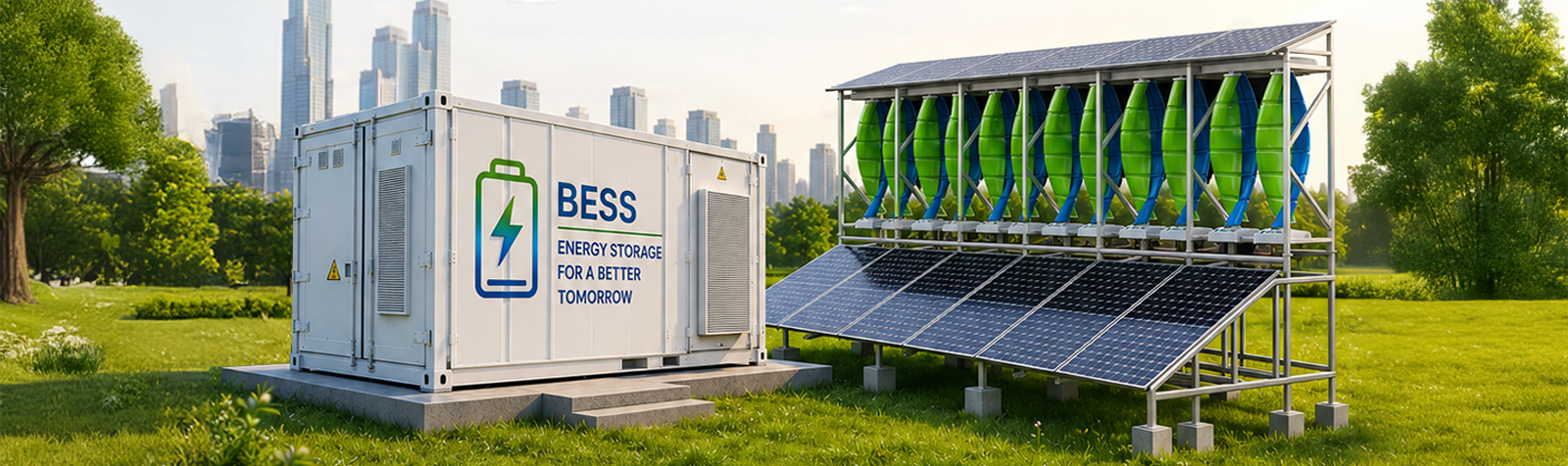
Batteries are more than an emergency backup device. In larger renewable-energy systems, Battery Energy Storage Systems can shift electricity from one period to another, support demand management, improve renewable utilization, and provide resilience.
For example, solar generation during the afternoon charges a BESS, and that stored energy is dispatched later, when it's actually needed. This concept becomes increasingly important as renewable projects move beyond simple energy generation toward dispatchable clean power.
NECON's BESS architecture combines battery modules with battery management, power conversion, energy management, monitoring, and safety systems.
Residential vs Industrial Solar: What Changes?
The on-grid versus off-grid comparison is often presented as a residential rooftop decision. At larger scales, the terminology becomes more complex.
For a factory, commercial campus, or large industrial consumer, grid-connected renewable power can involve configurations such as on-site solar, open-access renewable power, group captive arrangements, solar-plus-storage, wind-solar hybrid projects, grid-connected battery storage, and hybrid renewable power parks.
In these applications, the question is no longer simply whether a battery is needed. Instead, the project has to answer how generation, storage, grid access, and demand should be coordinated to deliver the required power profile at the lowest practical lifecycle cost. That is where system-level engineering becomes more important than simply selecting an on-grid or off-grid label.
Why Hybrid Power Parks Matter at Industrial Scale
Solar generates mainly during daylight hours. Wind generation can complement solar depending on local wind resources and project conditions. Battery storage provides the ability to shift energy across time. Combining these technologies can create a more flexible renewable energy architecture.
NECON's solar power solutions are designed for standalone solar applications as well as integration with wind and battery systems. Its hybrid power parks combine solar, wind, and BESS for applications requiring a more consistent renewable power profile.
NECON's Battery Energy Storage System solutions are designed to store electricity and dispatch it when required, supporting applications such as energy shifting, renewable integration, peak-demand management, and selected backup requirements.
For sites where different renewable resources need to complement each other, NECON's Vertical Axis Wind Turbine technology is another part of the company's integrated renewable-energy approach.
A Way to Choose the Right System
1. Is a reliable grid connection already available?
Yes: Start by evaluating grid-connected or hybrid solar. No: Evaluate an off-grid or other independent power architecture.
2. Do you need electricity during grid outages?
No: A basic on-grid system may be sufficient. Yes: Consider a hybrid or battery-backed configuration.
3. Can the site operate without the utility grid?
Yes: Off-grid may be practical. No: Grid-connected or hybrid is usually more appropriate.
4. Is battery storage economically justified?
Consider the value of backup, peak demand reduction, energy shifting, and renewable utilization, not just the battery's purchase price.
5. Is the project residential or industrial?
A residential rooftop system follows a very different economic and regulatory path from a utility-scale, commercial, or industrial renewable project.
On-Grid vs Off-Grid Solar: Choosing the Right System
The simplest way to remember the difference: on-grid solar uses the grid as the balancing source. Off-grid solar uses batteries as the balancing source. Hybrid solar uses both the grid and batteries.
For a location with stable grid electricity and a primary goal of reducing energy bills, a grid-connected system is often the most straightforward option. For a remote site that cannot depend on the utility network, off-grid solar can provide energy independence, but only when generation and storage are correctly sized. For a site that needs both solar savings and backup power, a hybrid configuration can provide a better balance.
At commercial and industrial scale, however, the decision goes beyond on-grid versus off-grid. The better question is how solar, wind, battery storage, grid connectivity, and energy demand should work together to deliver the required power profile. That system-level approach is increasingly important for the development of reliable renewable infrastructure.
Frequently Asked Questions
What is the main difference between grid-connected and off-grid solar systems?
A grid-connected solar system remains connected to the utility grid and can import or export electricity under the applicable arrangement. An off-grid solar system operates independently of the grid and relies on energy storage to supply electricity when solar generation is unavailable.
Is on-grid solar better than off-grid solar?
Neither system is universally better. On-grid solar is generally better suited to locations with reliable electricity infrastructure and a focus on reducing electricity costs. Off-grid solar is more suitable where grid electricity is unavailable or independence from the utility is essential.
Does an on-grid solar system work during a power cut?
A standard grid-tied solar system normally shuts down when the utility grid fails, because of anti-islanding protection. Backup during an outage requires an appropriate battery-backed or hybrid configuration.
Does off-grid solar need batteries?
Yes. Because an off-grid system does not have the utility grid as a backup source, battery storage is normally required to provide electricity when solar generation is unavailable.
What is a hybrid solar system?
A hybrid solar system combines solar generation, grid connectivity, and battery storage. It can provide energy savings while also supplying backup power to selected loads during grid interruptions, depending on the system design.
Does hybrid solar qualify for PM Surya Ghar subsidy?
Eligibility depends on the approved grid-connected rooftop configuration and the applicable scheme and DISCOM rules. The presence of a battery should not be treated as automatic proof of subsidy eligibility. Verify the proposed configuration before budgeting the CFA.
Which solar system is best for a factory?
The answer depends on the factory's load profile, grid connection, tariff structure, operating hours, backup requirements, and renewable-energy objectives. Larger industrial projects may benefit from solar-plus-storage, wind-solar hybrid systems, or other grid-connected renewable configurations rather than a simple residential-style on-grid or off-grid choice.
Can solar, wind, and batteries work together?
Yes. Solar and wind can be combined with Battery Energy Storage Systems to create a hybrid renewable-energy system. NECON's hybrid power park model integrates solar, wind, BESS, and energy-management capabilities for large-scale renewable applications.