Solar power parks in India are doing more than adding megawatts. They are changing how the country plans, builds, and connects clean energy at scale.
Instead of building hundreds of separate solar plants in scattered locations, a solar park creates a dedicated zone where developers can plug into shared infrastructure. This model reduces delays, lowers risk, and makes large projects easier to finance.
For businesses and utilities, that means faster access to cleaner electricity and a clearer path to long-term energy security.
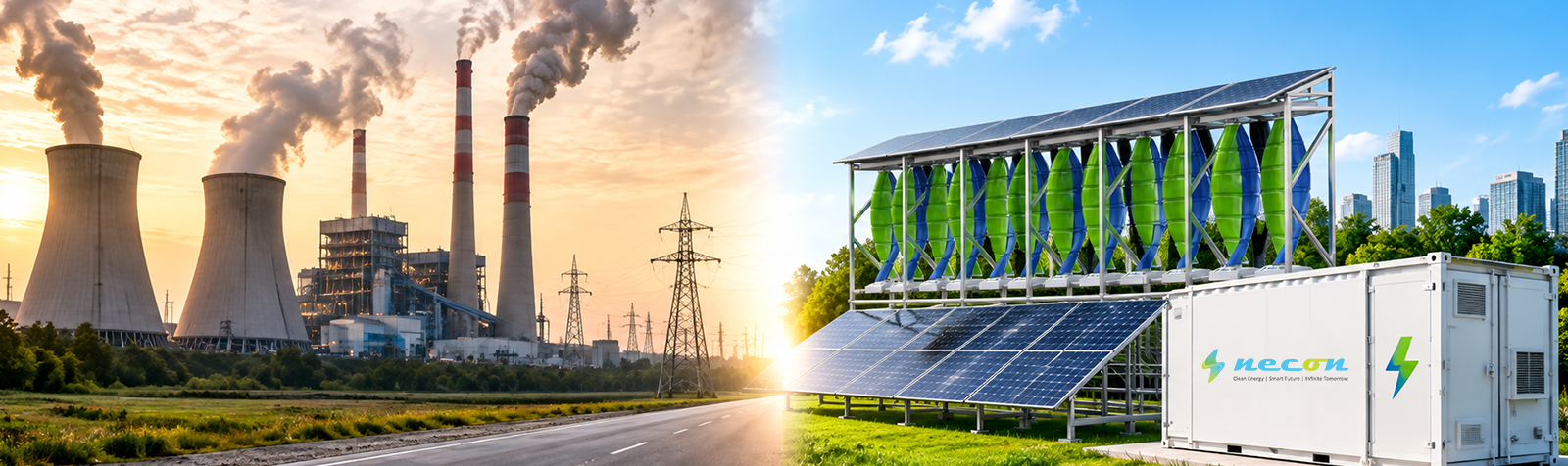
At NECON, we see solar power parks as a foundation for the next phase of India’s transition. The future is not only large solar plants. It is large, hybrid power parks that combine solar, wind, and storage to deliver reliable power.
What is a solar power park?
A solar power park is a large area of land developed with common infrastructure so multiple solar projects can be built faster.
The Ministry of New and Renewable Energy (MNRE) describes solar parks as large chunks of land developed with shared facilities such as transmission infrastructure, roads, water, drainage, and communication networks, along with statutory clearances. This allows developers to set up solar projects with fewer hurdles.
You can read the official scheme overview on MNRE’s page: development of solar parks and ultra mega solar power projects.
Why solar parks are transforming India’s energy landscape
Solar parks are changing the energy landscape because they solve practical problems that slow down renewable energy deployment.
1) Faster deployment through shared infrastructure
When every project must arrange its own land, approvals, roads, and evacuation lines, timelines become unpredictable.
A solar park centralizes these requirements, so developers can focus on building generation.
SECI explains that a solar park provides a well-characterized area with assured availability of land and transmission infrastructure, and that the scheme helps reduce the number of approvals needed. See: SECI solar park overview.
2) Lower project risk and stronger investment confidence
Solar projects have three big categories of risk:
land and approvals
grid connectivity
execution timelines
Solar parks reduce these risks by making land and evacuation planning more structured. That is one reason solar parks have attracted significant interest from developers and lenders.
This is also where engineering quality matters. Utility-scale investors want predictable performance for decades, not just a successful commissioning date.
To understand NECON’s approach to long-term reliability and performance, visit innovation and technologies.
3) Better grid integration and a clearer path to 2030 goals
As renewable capacity grows, connecting generation to demand centers becomes one of the biggest constraints.
The Government of India has highlighted the importance of transmission planning for integrating 500 GW of non-fossil capacity by 2030. A Press Information Bureau (PIB) release notes that a high-level committee prepared a plan titled “Transmission System for Integration of over 500 GW RE Capacity by 2030”, including a broad plan for required transmission to support around 537 GW of renewable energy capacity by 2030.
See the official release here: PIB update on transmission planning for 500 GW by 2030.
For solar power parks, this matters because the biggest parks tend to be located in high-resource regions. Stronger transmission makes those projects more valuable and reduces curtailment risk.
4) Job creation and local development
Solar parks can create local economic value when development is planned responsibly.
Research organizations like the Council on Energy, Environment and Water (CEEW) highlight how large-scale solar deployment can support employment and local area development, and they reference real solar park models such as Pavagada.
Learn more from CEEW here: utility-scale solar deployment (CEEW).
5) A bridge from electricity generation to clean energy infrastructure
India’s energy transition is moving from a generation story to an infrastructure story.
By 2030, the most successful solar parks will be the ones that act like energy campuses. They will not only generate solar electricity. They will support stability, predictability, and cleaner power for industry and the grid.
What changes in the next phase of solar parks
Solar parks are already a proven model. The next phase is about making them more reliable and more useful to the grid.
Solar plus storage will become more common
Solar generation drops in the evening, which is also when demand can rise. This is why Battery Energy Storage Systems are becoming more important.
Storage can help:
shift solar energy to peak hours
reduce fluctuations
reduce curtailment
support more predictable supply
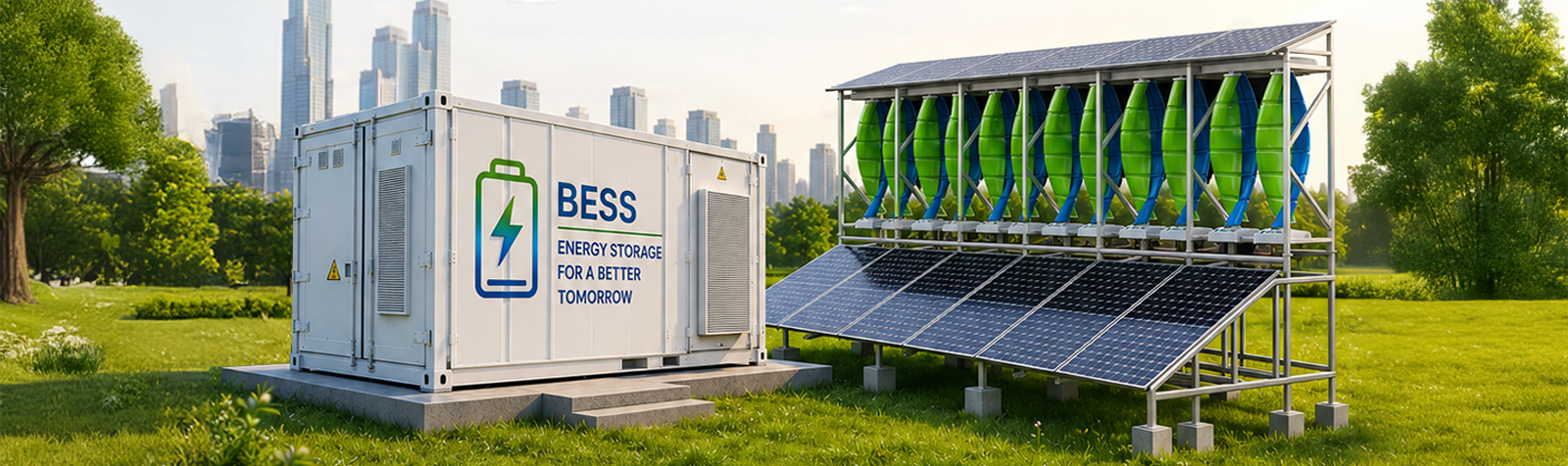
NECON’s hybrid approach is built around combining generation and storage for better outcomes.
Hybrid parks will grow fast
Many solar parks will connect to wind zones or evolve into hybrid parks.
Wind can complement solar in many regions, and hybrid systems can improve the usable energy delivered over the day and across seasons.
NECON’s wind technology is designed for integration into hybrid systems, especially where wind conditions are variable. See vertical axis windmill.
Higher focus on quality, uptime, and lifecycle performance
Large solar parks are designed to operate for 25 years or more.
As the market matures, buyers and investors will increasingly ask:
How stable is performance year after year
How strong are warranties and service coverage
How fast can faults be detected and fixed
How well does the system handle heat, dust, and harsh conditions
NECON’s solar solutions are designed with an engineering-first focus for long-term reliability.
Challenges that still need attention
Solar parks make development easier, but large-scale projects still face challenges. The key is early planning and responsible execution.
Land and community alignment
Large parks require large land parcels. Transparent processes and community engagement are essential to avoid delays and ensure long-term stability.
Water and site sustainability
In many regions, water is scarce. Cleaning and construction needs must be managed carefully through efficient practices and smart design.
Grid balancing and curtailment
As more solar is added, grid balancing becomes harder. Transmission upgrades, storage, and flexible operations will be critical.
This is why the future points toward hybrid and storage-supported parks rather than solar-only assets.
How NECON supports the solar park transformation
NECON’s mission is to help India move toward reliable, future-ready clean energy systems.
We support the solar park transformation through:
solar solutions designed for utility and hybrid parks
hybrid system design that combines solar, wind, and storage
wind technology designed for integration and diverse environments: vertical axis windmill
continuous improvement through field-driven engineering
We also stay aligned with sustainability outcomes and long-term value creation for customers and communities. Learn more on sustainability and the broader mission on our story.
Building India's Next Generation of Clean Energy
Solar power parks are transforming India’s energy landscape because they remove bottlenecks that slow down clean energy deployment. They bring land, approvals, and shared infrastructure into one coordinated model.
The next phase will go even further. Solar parks will increasingly become hybrid clean power hubs, combining solar with storage and wind so the grid can rely on cleaner power throughout the day.
For India, this is how the transition moves from capacity targets to real energy outcomes: reliability, affordability, and sustainability at scale.
Talk to NECON
If you are planning a utility-scale solar park, a hybrid park, or a storage-backed renewable project, NECON can support you with engineered, scalable clean power solutions.
Ready to power your next renewable energy project? Connect with our team today.